On the way · Galicia
For pilgrims walking with us
A companion resource for foot training, ailment prevention, and recovery — grounded in the realities of the Way.
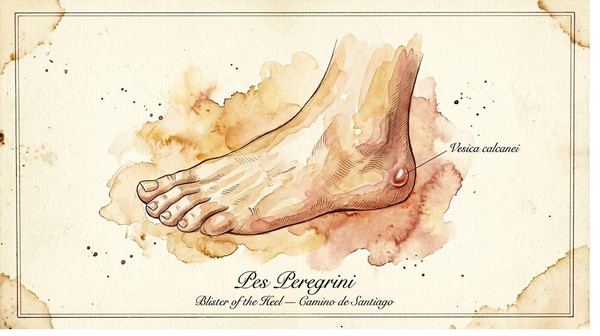
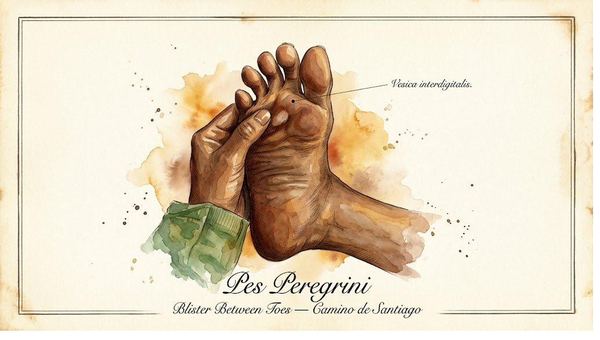
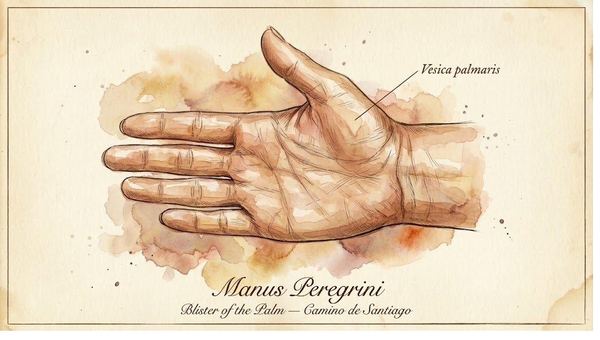
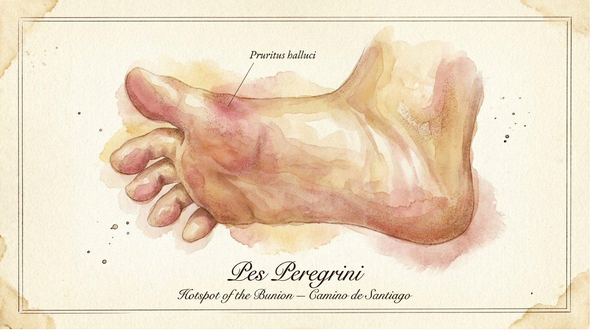
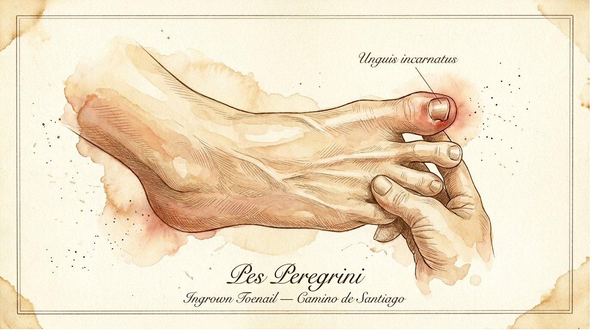
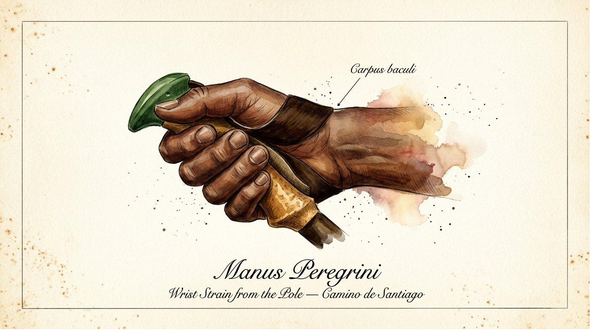
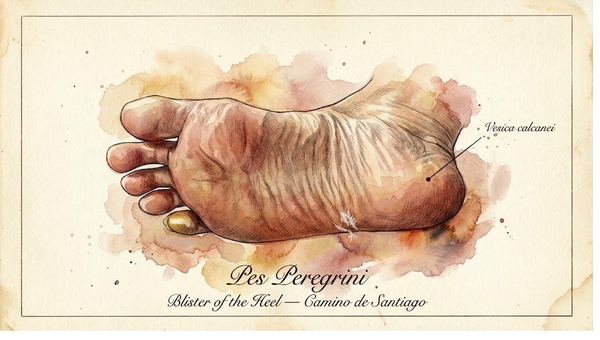
Each card lists the Spanish and English names side by side — useful if you ever need to describe a symptom to a pharmacist or médico along the Way.
Repetitive shear deformation in the epidermis, worsened by moisture and heat.
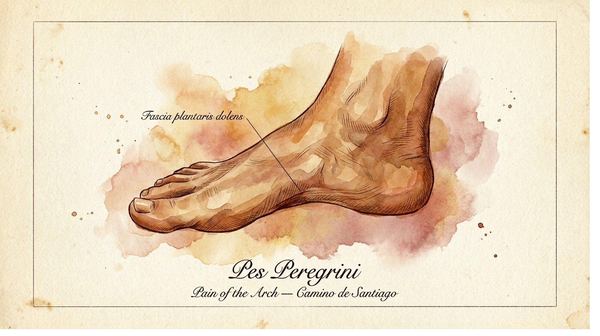
Inflammation of the fibrous tissue along the sole, usually from mileage added too quickly.
Strain on the Achilles from sudden elevation gain or lack of calf flexibility.
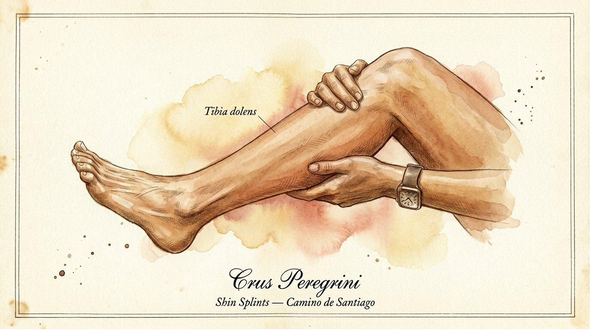
Inflammation where calf muscles attach to the shinbone, from abrupt increases in volume.
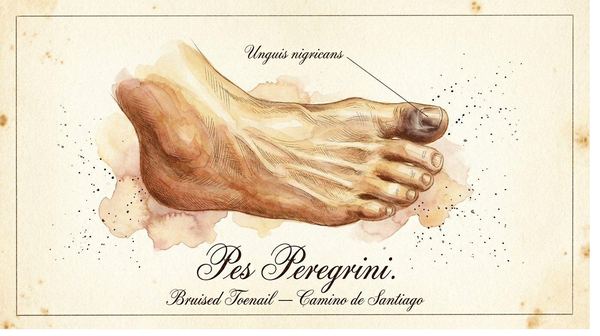
Repeated impact of toes against the front of the shoe on descents.
A symptom umbrella — pain at the ball of the foot from repeated impact on hard surfaces.
Tight lacing compresses the long tendons on the top of the foot against the bones.
Pain along the outer edge of the foot, from terrain that rolls the foot outward.
Eight hundred kilometers. Eight injuries. One preparation.
So you trained the tissue long before the first step, rather than reacting to blisters on the trail.
Every claim traceable to peer-reviewed research or named clinical experience, with sources cited openly.
Where the evidence is thin, this guide says so — rather than pretending all advice carries equal weight.
Every word in both English and Spanish — so you can describe a symptom to a farmacia or a médico when it matters.
An app you can install on your phone — offline, at 6pm in an albergue, when something on your foot does not look right.
Companion guides across the full arc of the pilgrimage — each designed for the phase you are actually in.
Foot training, tissue preparation, gear selection, ailment prevention. The twelve weeks that shape how your body meets the Way.
The Blister Guide. The Conditions Atlas. Field protocols for heat, exhaustion, and the moments when the body needs more than care. The Way as it unfolds underfoot.
Recovery, reflection, and the long return. How to bring home what happened to your body and what happened to your attention.
A progressive plan that builds your feet, legs, and spirit for the Way — adaptable to your starting fitness, route, and departure date.
The four phases above are the arc. This is the prescription — what to do on a given Tuesday in week three. Walking is the foundation; cross-training and yoga keep the joints honest.
Before you start any workout regime, consult with your doctor — check on your current health and ability to maintain this type of activity for three months.
Something that is REALLY important is to NOT OVER DO IT. The last thing you want is to get injured prior to the trip.
We recommend joining a yoga class to help with stretching and conditioning. This will also help you relax and focus on the goal at hand without overdoing it.
A synthesis of current best practice, grounded in peer-reviewed evidence and clinical experience, adapted to the realities of the Camino. Seven chapters, evidence-cited, clinically reviewed.
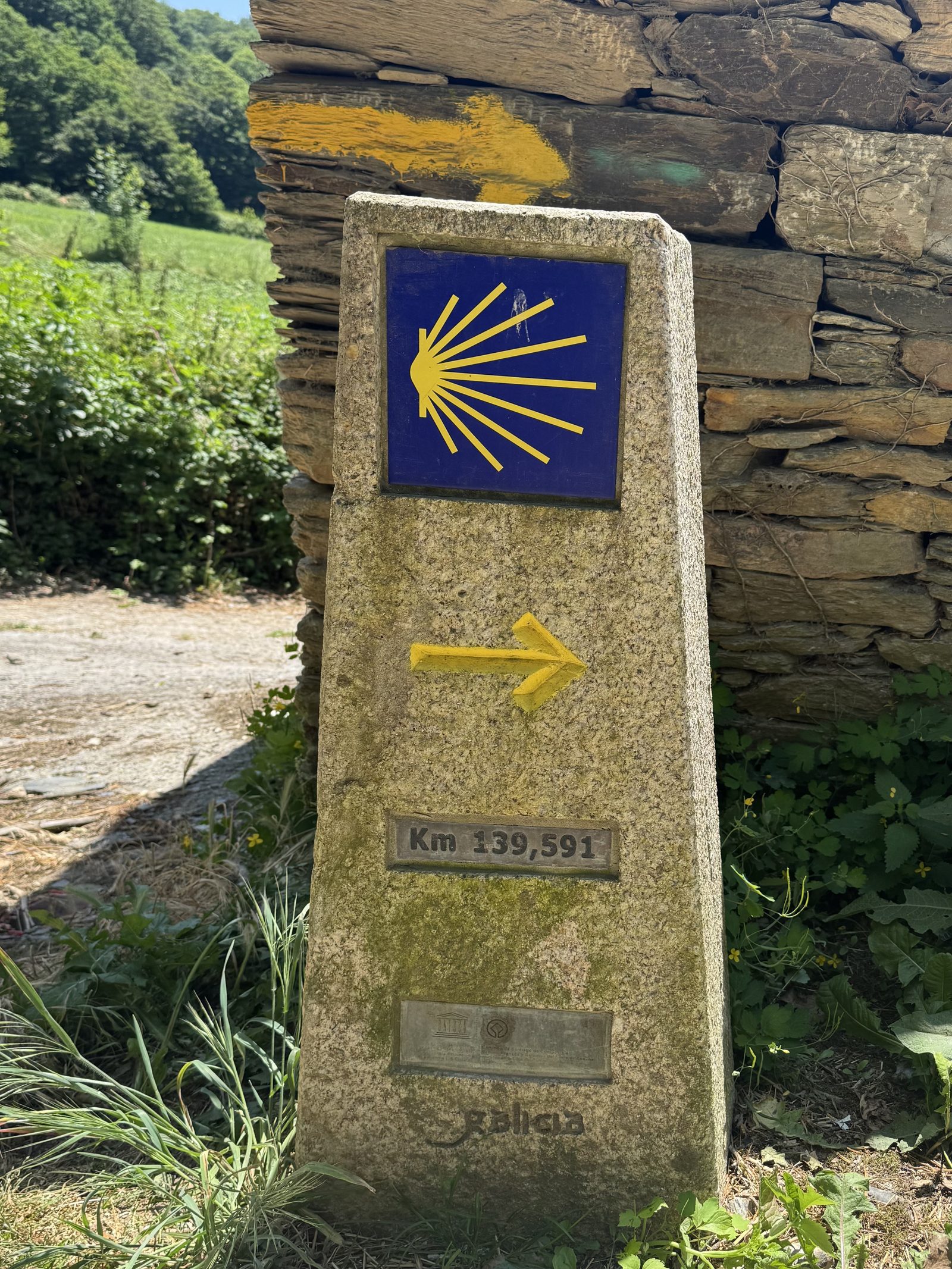
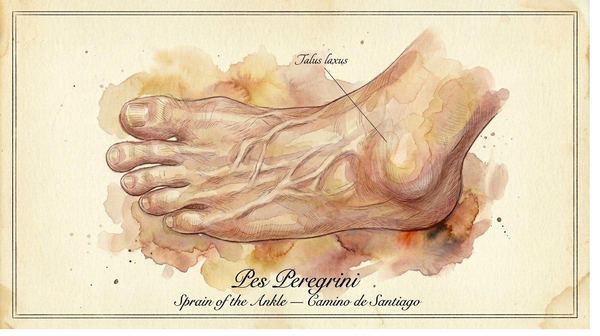
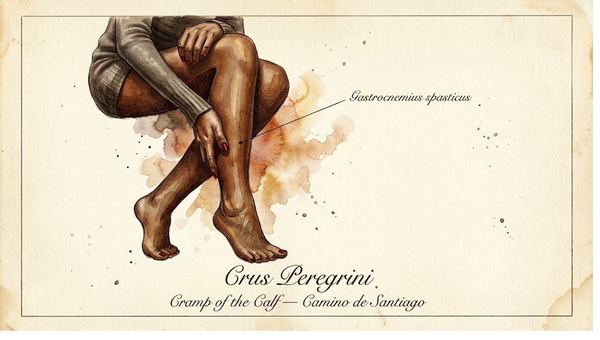
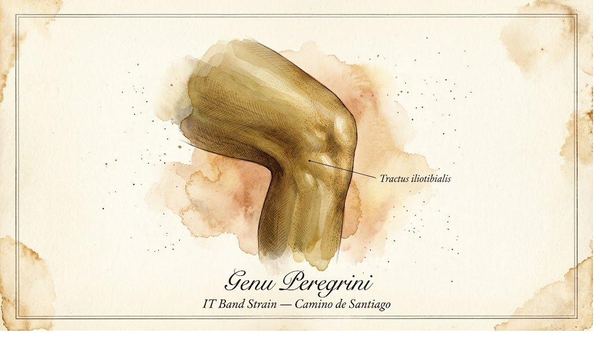
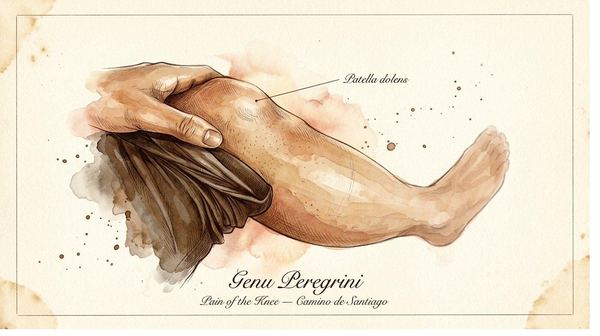
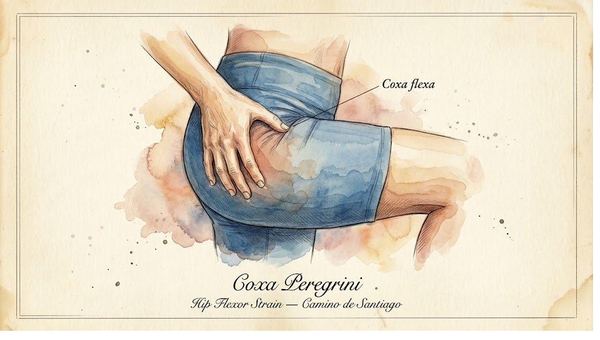
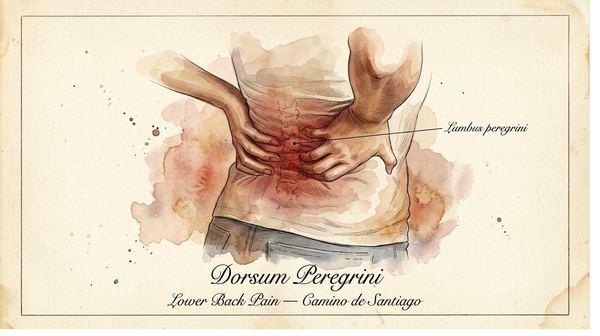
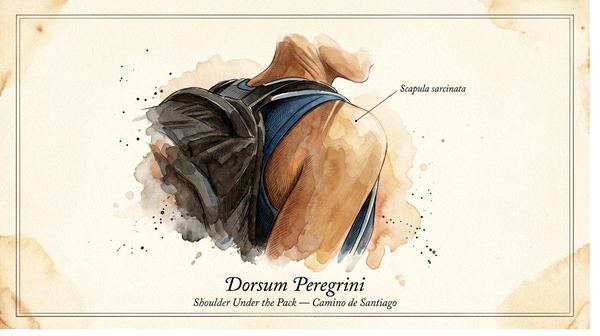
Every condition in the Guide has its own watercolor plate — Latin binomial, English name, the place on the body it lives. A visual atlas you can carry.
Start the training plan. Read the Blister Guide. Arrive prepared.
Begin your preparationEducational content only. Not a medical diagnosis or a substitute for examination by a qualified healthcare professional. Synthesized from the cited peer-reviewed literature by Drawn to the Camino. Final wording pending medical and legal review.